~ SHARING SUNDAY ~

Around the School

Around the School

September 4th-17th - Candy Bar Sales - by the PTO
September 14th - PTO Craft Night 5:30-7:30
September 22nd - Homecoming Hustle
September 24th - PTO Meeting 3-4pm
October 1st-2nd - Camp Goodfellow (4th Grade - 3 Classes)
October 12th - End of 1st Grading Period
October 12th - PTO Tailgate
October 15th-16th - Camp Goodfellow (4th Grade -1 Class)
September 22nd - Homecoming Hustle
September 24th - PTO Meeting 3-4pm
October 1st-2nd - Camp Goodfellow (4th Grade - 3 Classes)
October 12th - End of 1st Grading Period
October 12th - PTO Tailgate
October 15th-16th - Camp Goodfellow (4th Grade -1 Class)
Around Duneland

The Homecoming Hustle is a Fun Run/Walk event and is one of the Foundation's biggest fundraisers. Events such as this race make it possible for teachers and schools to receive grants for educational initiatives.
This event is for adults and children (parent signature required).
The school with the most participants will receive the traveling Homecoming Hustle trophy. (Bailly Elementary School was the 2017 trophy recipient)
Pre-registration ($20) which includes race & shirt is due September 12, 2018
Registration ($20) after September 12, 2018 does not guarantee a shirt.
FRIDAY, SEPTEMBER 21, 2018
Shirt Pick Up DEF Office 5:00 p.m.-6:00 p.m.
Shirt Pick Up CHS Stadium 6:30 p.m.-8:30 p.m.
SATURDAY, SEPTEMBER 22, 2018
Registration/Shirt Pick Up CHS 7:30 a.m.-8:30 a.m.
Race Start CHS 9:00 a.m.
Sign-up Today so we can bring that Trophy to Yost!

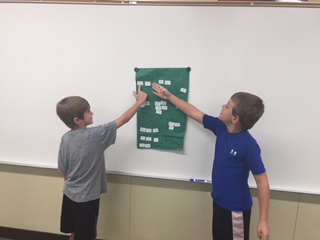
 2ND GRADE: ELDORADO: We continued on our journey with Eldorado. This week we focused on the feelings box, the main idea box and the images box. When we worked on the main idea it was a perfect chance to utilize our focus wall and discuss theme. We discussed that this box is not a summary of what you read, but instead what the author was teaching the reader. We decided that the lesson for today was to never give up on a dream, no matter how hard or long it may take to achieve it.
 We looked back at our focus wall and discovered that the word perseverance is a common theme when a character never gives up. The last box we worked on was images. This is where the reading analyzer asks the students to make connections. It asks them what description was used and to connect that with what that makes you think of while reading the story. Some of my friends were struggling with this box, so they closed their eyes and I reread the poem. Then I asked them to explain what images were in their mind while I read it. If they still needed some guidance, we discussed what they connected a knight with while they heard the story. This was a big help to a few of my friends. To end the day, they were asked to revisit their journals and to now write what this poem is all about. This time around it was much easier after completing the reading analyzer.
 We briefly reviewed how are interactions with are pets become a form of communication between the two of us. Then we looked back at the directions to our chart and the students independently completed this activity. The chart looks for and identifies whether an interaction was positive or negative, the specific behavior of the dog or cat, and what the interaction is requesting.
 Next, the students were given the option to continue on with How to Speak to a Dog or they may switch to How to Speak to a Cat. It was great seeing the students select the book based on the pet they have so they can learn more about their language they have with them. We will wrap this lesson up next week.
 We also discussed the relationship between the child and her grandma. This brought up the idea that a family is a system because they support one another. We then looked back at how the author organized our story. This was presented to the reader in two ways problem and solution and sequence. The students are going to focus on the importance of sequence of events for the remainder of the lesson. As a class, we brainstormed different parts of a system for a student to do their best in school. They listed off study habits, rocket math, writing, and a good morning routine. This was a great start - I told them to think of which one they may want to outline the steps for as a writing project next week.

 We have been using several sheets to help us review how to measure with inches and half-inches. This began to introduce the relationship between the two measurements - one student quickly caught onto the idea it was doubling.

The students also faced a challenge of measuring items longer than their ruler. Some students were using their finger to mark the location. This strategy had a few problems. The first problem we noticed were fingers moved while marking the location..
 Another error we caught was some friends were leaving the gap of the finger width, as they marked it and were not starting back at the right location. Other students marked a line on their sheet to know where to continue measuring again. We concluded that this method gave us the least amount of errors. We will continue exploring the relationships between inches and half-inches next week.
 Last week we focused on folding our fractions strips in half, which we discovered was doubling the pieces of our fraction. We started this week by creating a strip with 5 pieces - this one tends to be trickier for the students, as there isn't really a trick, but more eye-balling it up as you fold. This always presents as a challenge for my perfectionists!
 After we created our fifths, the students could double it to tenths easily with a half fold - giving us our two new fractions of fifths and tenths. Next we changed gears to our ninths and fifteenths. Our half fold would not give us a multiplication fact to get to those two numbers. Some students quickly remembered the S-fold will times a piece by 3. The students were challenged to create these to strips on their own. After creating all of our fraction strips, it was time to change gears again and discuss equivalent fractions. They placed their strips in order starting with the whole and ending with sixteenths. This allowed them to see where equivalent fractions line up with one another. They quickly were able to identify all the fractions equivalent to one whole and one half. Then they looked further and were found 1/4 = 2/8, 1/5 = 3/15, and 1/3 = 2/6 as some more examples. We will wrap up equivalent fractions next week.
Have a Great Weekend,


 2ND GRADE: ELDORADO: We continued on our journey with Eldorado. This week we focused on the feelings box, the main idea box and the images box. When we worked on the main idea it was a perfect chance to utilize our focus wall and discuss theme. We discussed that this box is not a summary of what you read, but instead what the author was teaching the reader. We decided that the lesson for today was to never give up on a dream, no matter how hard or long it may take to achieve it. We looked back at our focus wall and discovered that the word perseverance is a common theme when a character never gives up. The last box we worked on was images. This is where the reading analyzer asks the students to make connections. It asks them what description was used and to connect that with what that makes you think of while reading the story. Some of my friends were struggling with this box, so they closed their eyes and I reread the poem. Then I asked them to explain what images were in their mind while I read it. If they still needed some guidance, we discussed what they connected a knight with while they heard the story. This was a big help to a few of my friends. To end the day, they were asked to revisit their journals and to now write what this poem is all about. This time around it was much easier after completing the reading analyzer.
3RD GRADE: INTERPRETING INTERACTIONS:
 We briefly reviewed how are interactions with are pets become a form of communication between the two of us. Then we looked back at the directions to our chart and the students independently completed this activity. The chart looks for and identifies whether an interaction was positive or negative, the specific behavior of the dog or cat, and what the interaction is requesting.
  Next, the students were given the option to continue on with How to Speak to a Dog or they may switch to How to Speak to a Cat. It was great seeing the students select the book based on the pet they have so they can learn more about their language they have with them. We will wrap this lesson up next week.
4TH GRADE: DETAILING A PERSONAL PROCEDURE:

We started out with a discussion on Thunder Cake. We looked at the author's purpose of the story - how to calm a fear. We identified two procedures that were a part of the bigger system of conquering a fear of storms: counting the thunder and making the cake.

We started out with a discussion on Thunder Cake. We looked at the author's purpose of the story - how to calm a fear. We identified two procedures that were a part of the bigger system of conquering a fear of storms: counting the thunder and making the cake.
 We also discussed the relationship between the child and her grandma. This brought up the idea that a family is a system because they support one another. We then looked back at how the author organized our story. This was presented to the reader in two ways problem and solution and sequence. The students are going to focus on the importance of sequence of events for the remainder of the lesson. As a class, we brainstormed different parts of a system for a student to do their best in school. They listed off study habits, rocket math, writing, and a good morning routine. This was a great start - I told them to think of which one they may want to outline the steps for as a writing project next week.
We will continue on with procedures next week.
2ND GRADE: LENGTH - MARBLE CRASH TEST:
 We have been using several sheets to help us review how to measure with inches and half-inches. This began to introduce the relationship between the two measurements - one student quickly caught onto the idea it was doubling.
The students also faced a challenge of measuring items longer than their ruler. Some students were using their finger to mark the location. This strategy had a few problems. The first problem we noticed were fingers moved while marking the location..
 Another error we caught was some friends were leaving the gap of the finger width, as they marked it and were not starting back at the right location. Other students marked a line on their sheet to know where to continue measuring again. We concluded that this method gave us the least amount of errors. We will continue exploring the relationships between inches and half-inches next week.
3RD GRADE: LENGTH - MEASURING ME!:
 This week we reviewed our answers from measuring around the room. We observed a problem right away none of their answers matched up and were usually off by 1 centimeter. We quickly found the error - to measure you align the first tick mark not the edge of the ruler. Now they were ready to master measuring with our next project! For the activity of Measuring Me, we brainstormed a list of items we can measure on ourselves. Then they needed to list the tool they would use and explain the steps to measure with it. We came up with several examples: height, weight, shoes, temperature, our eyes (& vision), clothes and the circumference of our head. We will continue with this project next week.
 This week we reviewed our answers from measuring around the room. We observed a problem right away none of their answers matched up and were usually off by 1 centimeter. We quickly found the error - to measure you align the first tick mark not the edge of the ruler. Now they were ready to master measuring with our next project! For the activity of Measuring Me, we brainstormed a list of items we can measure on ourselves. Then they needed to list the tool they would use and explain the steps to measure with it. We came up with several examples: height, weight, shoes, temperature, our eyes (& vision), clothes and the circumference of our head. We will continue with this project next week.
 Last week we focused on folding our fractions strips in half, which we discovered was doubling the pieces of our fraction. We started this week by creating a strip with 5 pieces - this one tends to be trickier for the students, as there isn't really a trick, but more eye-balling it up as you fold. This always presents as a challenge for my perfectionists!
  After we created our fifths, the students could double it to tenths easily with a half fold - giving us our two new fractions of fifths and tenths. Next we changed gears to our ninths and fifteenths. Our half fold would not give us a multiplication fact to get to those two numbers. Some students quickly remembered the S-fold will times a piece by 3. The students were challenged to create these to strips on their own. After creating all of our fraction strips, it was time to change gears again and discuss equivalent fractions. They placed their strips in order starting with the whole and ending with sixteenths. This allowed them to see where equivalent fractions line up with one another. They quickly were able to identify all the fractions equivalent to one whole and one half. Then they looked further and were found 1/4 = 2/8, 1/5 = 3/15, and 1/3 = 2/6 as some more examples. We will wrap up equivalent fractions next week.
 Have a Great Weekend,

Ms Losinski