~ FAST-FLYING FRIDAY ~
I cannot believe how fast another year is flying by on us again! It is hard to imagine the first day of winter will be here next week on December 21st. Although it seems we are already feeling it! You will see below we are also approaching the half-way point to our school year - next Friday ends the 2nd Quarter. Where has the time gone?
AROUND THE SCHOOL

December 22nd: End of 2nd Quarter
December 25th: January 7th:
Winter Recess
January 8th: School Resumes
January 8th: School Resumes
January 15th: No School - Martin Luther King Jr Day
LANGUAGE ARTS
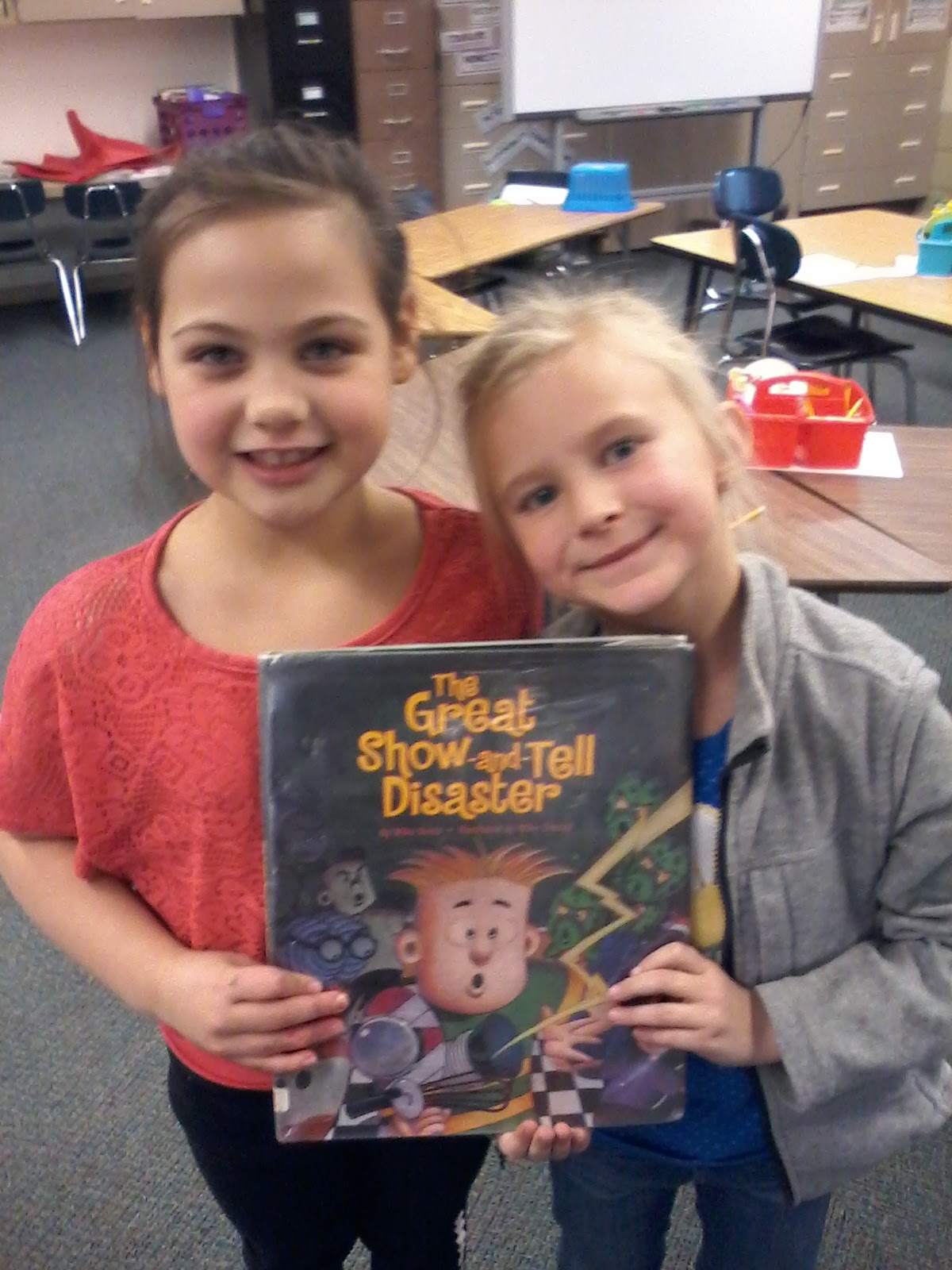
1st Grade: Magical Anagrams: This week we reviewed the definition of an anagram. We read the preview to our next story The Great Show and Tell Disaster by Mike Reiss. In the preview, we focused on the anagrams they gave us for two students: Brian was turned into a Brain and Kristen was turned into a Stinker.

Then, it was time for the students to see if they could discover what the teacher Mrs. Eaton was turned into in our story. In a few minutes, the students took the letters in her name and turned her into a Monster! As we read the story, we paid close attention to the illustrations and how he brought the anagrams to life.
 After our story, the students were introduced to a new tool - the vocabulary map. We use this tool to better understand new and interesting words. We practiced filling it out with the word colossal. In this form the students not only discover the definition to a word, but they are introduced to the synonym, antonym, part of speech and number of syllables. It also allows them to work with the word further by writing it in a sentence. It was great seeing them take their time thinking of the perfect sentence for our word. Next week we will continue to work with anagrams.
  2nd Grade: Socratic Seminar: This week the students learned about using a Socratic Seminar to hold a discussion. We went over how a proper seminar would work. The class would be split into 2 groups each one taking a turn in the inner and outer circle. When a group was in the inner circle they would hold a discussion on certain questions given to lead the conversation. While they would discuss it, the outer circle evaluates their discussion.
  They fill out a form with ideas that were important, ideas they liked, and a wish they thought would have happened during the discussion. Then the two groups would switch allowing each group an opportunity to participate in the inner and outer circle. We do not have a large enough group to run the Socratic Seminar properly, so we modified the rules slightly. The class participated in both sets of questions for the inner circle. They also did their best at taking down their thoughts to the discussion, while it took place. This was a bit of a challenge because they were busy sharing ideas. If time allowed, this group could have talked for 15 minutes on each topic! It is great hearing them share their thoughts and ideas from the story.
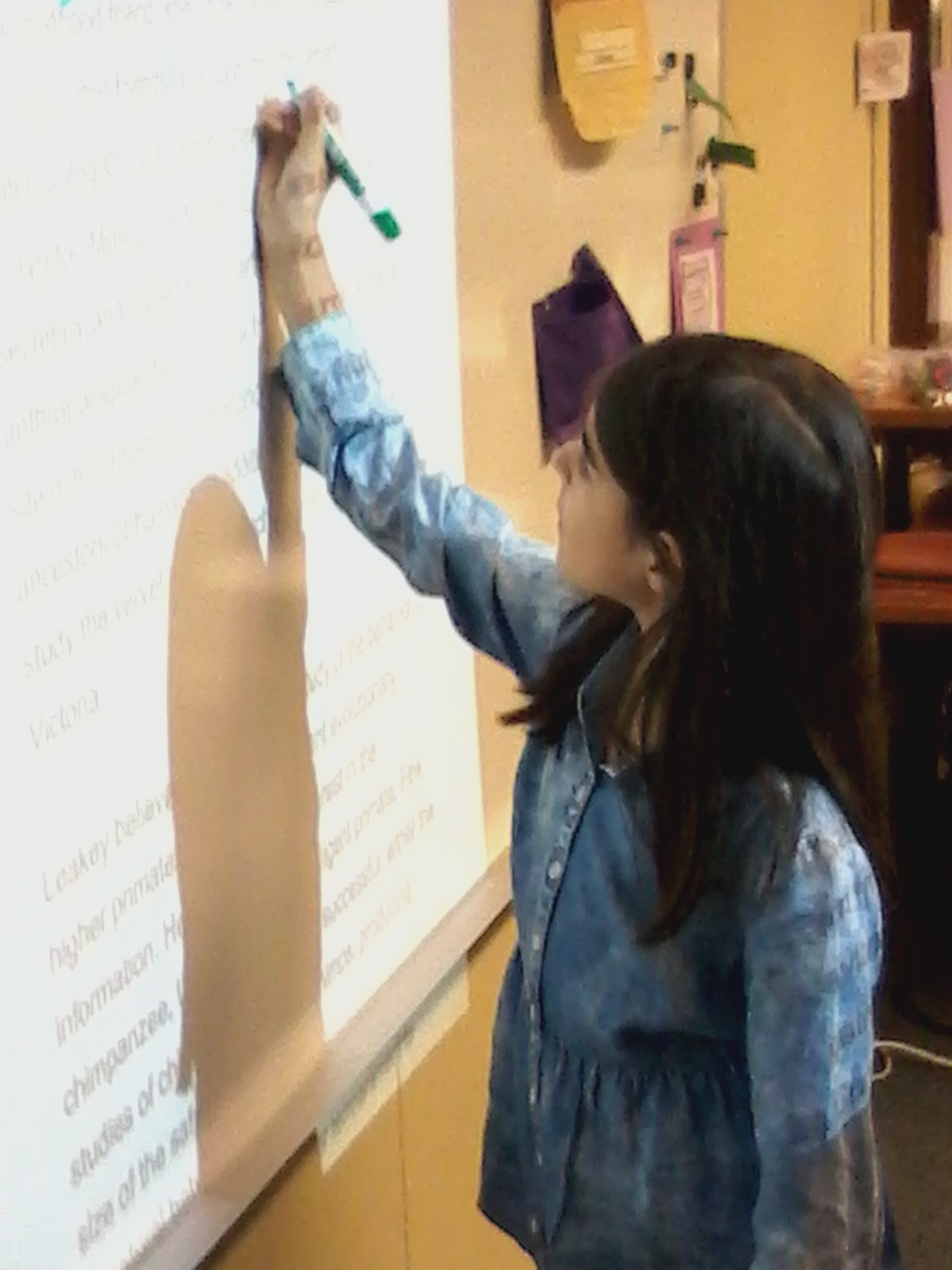
 3rd Grade: Annotations: This week was all about independent practice for this group. It was now their turn to complete a close read with annotations. They made a selection from 3 biographies of Jane Goodall of their choice. They were allowed to work on around the room as they read through and used their annotations on their reading packet.
 To help those that needed a little more assistance on what to write - we discussed using what our inner voice is telling us when we are reading to guide our annotations. Our inner voice is what tells us WOW that was amazing, I never knew that before, this seems important, or this part is a little tricky. It also helps make connections throughout our reading to our background knowledge on the topic.
MATH
 1st Grade: Angles: We started our week by reviewing angles. They were able to name all three angles, define them, draw an example of each and find them around the room. Next, we discussed different ways to identify attributes on a person.
 Next we played the One Loop Game with shapes. They were divided into two teams. Each team receives a set of shape with different attributes and labels. Team A places a label for the loop under the circle, while Team B will hold up a shape to see if it matches the rule.


Enjoy some extra photos from the week - we had lots of fun!


 3rd Grade: Hundred's Chart: This week we took some time to look at our patterns that our multiples formed and analyze them. We identified the columns they were in and if they were moving in a vertical or slanted line. If they were able to see a pattern with the multiples they would identify that too. An example of that would be that all the multiples of 5 ends in a 5 or 0.
 They recorded these results with their 100's charts. Next it was time to compare all the charts together. We identified all charts that displayed a vertical pattern: 2, 5 & 10. Then we explained why the multiples have this pattern. One example was when we count by 10's the multiple always falls in the 10's column. This idea is similar with our 5's as well with the multiple always falling in the column of our 5 or 10. To finish this sheet, the students worked in small groups to finish analyzing their 100's charts.


Some extra pictures from the week.
 4th Grade: Common Denominators: This week the students continued working with their benchmarks to place a set of fractions in order. We made a large number line on the board that the students could come up and work out any of the fractions they were struggling with in determining their position. This allowed them to talk it out with me, as they still worked to solve it. I saw their confidence grow the more they were able to solve them.
  Next, the students were asked to decide which fraction represented a larger amount of candy they would receive in a bag. They decided to take the improper fractions and turn them into mixed numbers and then place them in order with their benchmarks. This allowed them to quickly identify that one fraction represented 1 & 1/2 and the other was slightly more than a half.
  Our next set of fractions the children again chose to solve by changing the improper fraction to a mixed number. However, this time they were each 1 part of their fraction away: 1/6 & 1/10. Before talking out the solution, we took a vote to which candy bag the students would prefer.
  Then, we went back and discussed that when fractions are very close together they must consider the size of the fraction pieces. As soon as I stated this, I had students immediately remember and visualize this making them want to switch their vote. Being 1/10 of a fraction away from a whole than 1/6 made the fraction 19/10 our larger amount of candy.
  We had just enough time to let the students take our 4 bags of candy and place them in order from smallest to largest. 1 student quickly caught on that this was practice to them placing the 14 bags from their worksheet in order for next week. We will continue working with ordering fractions next week.
 Have a Great Weekend,